

What is Sensory Integration?
Sensory Integration is how the brain processes information from the body and the world around us - such as movement, touch, sound and internal body signals (like hunger or tiredness).
When sensory processing feels organised, children are calmer, more focused, and ready to play, learn and communicate. For some children, sensory input can feel overwhelming or not quite enough, which may affect regulation, attention and participation. This might look like becoming upset by everyday noises, avoiding certain textures or clothing, constantly moving or crashing into things, chewing objects, or finding it hard to calm their body enough to sit, listen, or join in. Some children may cope well in one setting and then “fall apart” later when their nervous system is exhausted.
These responses aren’t “behaviour” - they are a child’s nervous system doing its best to cope.
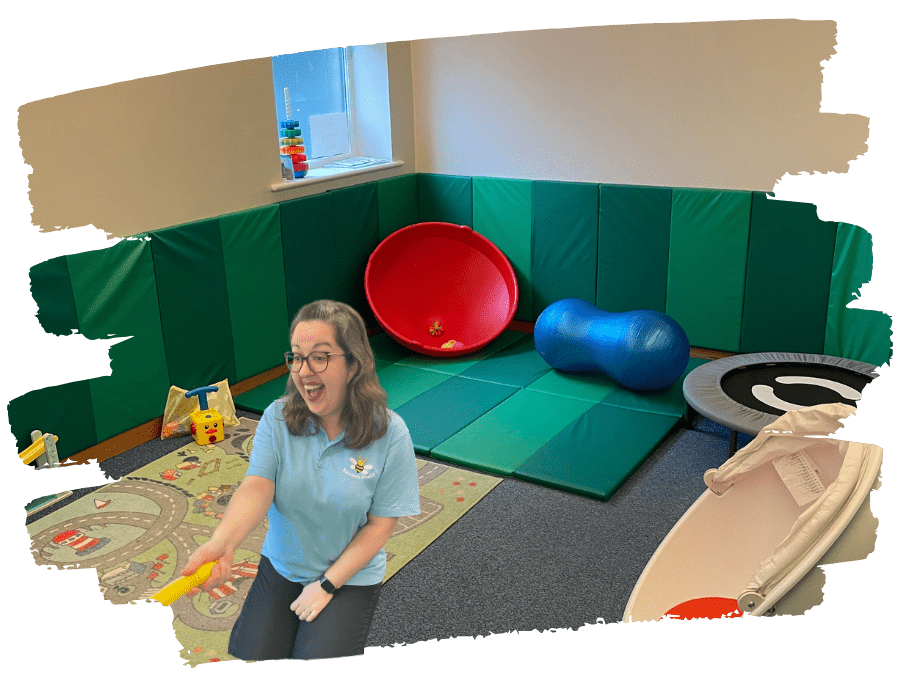
Why sensory integration matters for communication
Children communicate best when they feel regulated and comfortable in their bodies. When a child is overwhelmed or dysregulated; listening, understanding language and using speech can be much harder. Supporting sensory needs can help children to:
- feel calmer and safer
- join in with play and interactions
- stay engaged for longer
- communicate with greater confidence
Sensory‑informed support at Sensibus
At Sensibus, our sensory‑trained Speech and Language Therapist considers how each child experiences sensory input and what helps them feel “just right” for learning and connection.
We understand that regulation comes before communication. Support is:
- play‑based and child‑led
- sensory strategies woven naturally into communication activities
- practical, realistic and easy to use at home and school
All support is individualised, strengths‑based and focused on helping children feel safe, understood and able to communicate in ways that work for them.